What to Wear at a Splash Pad: Babies, Toddlers, and Kids
What your kid should wear at a splash pad depends more on their age than on the weather. Babies who aren't potty-trained need swim diapers, not regular ones. Toddlers do best in a UPF rash guard plus quick-dry bottoms. Older kids can wear pretty much any quick-dry swimsuit. And sun protection matters more than sunscreen at every age.
What should babies under one wear at a splash pad?
Swim diapers, not regular diapers. This is the one thing that matters most for babies who aren't potty-trained yet. A regular diaper hits water and turns into a sponge, then a very heavy sponge, then it starts falling apart in your hand while you're trying to change your baby on a bench. Swim diapers are designed to hold solids without absorbing water, which is the actual job you need them to do at a splash pad.
Over the swim diaper, put your baby in a UPF-rated rash guard and swim bottoms, or a long-sleeve one-piece swimsuit. For babies under six months, most pediatricians recommend skipping sunscreen entirely and relying on shade and protective clothing instead. That's a big reason the covered rash guard matters at this age. Check with your own pediatrician if you're not sure.
Skip water shoes for babies who aren't walking yet. Their feet don't need to grip anything, and shoes that stay wet all day aren't great for their skin. A soft sun hat with a chin strap does more for you than shoes will, mostly because it'll actually stay on their head.
What about toddlers, roughly one to three?
Toddlers are where the actual gear decisions start to matter. This is the age of running full-speed on wet concrete, wanting to sit down directly in a puddle, and being completely uninterested in holding still for sunscreen.
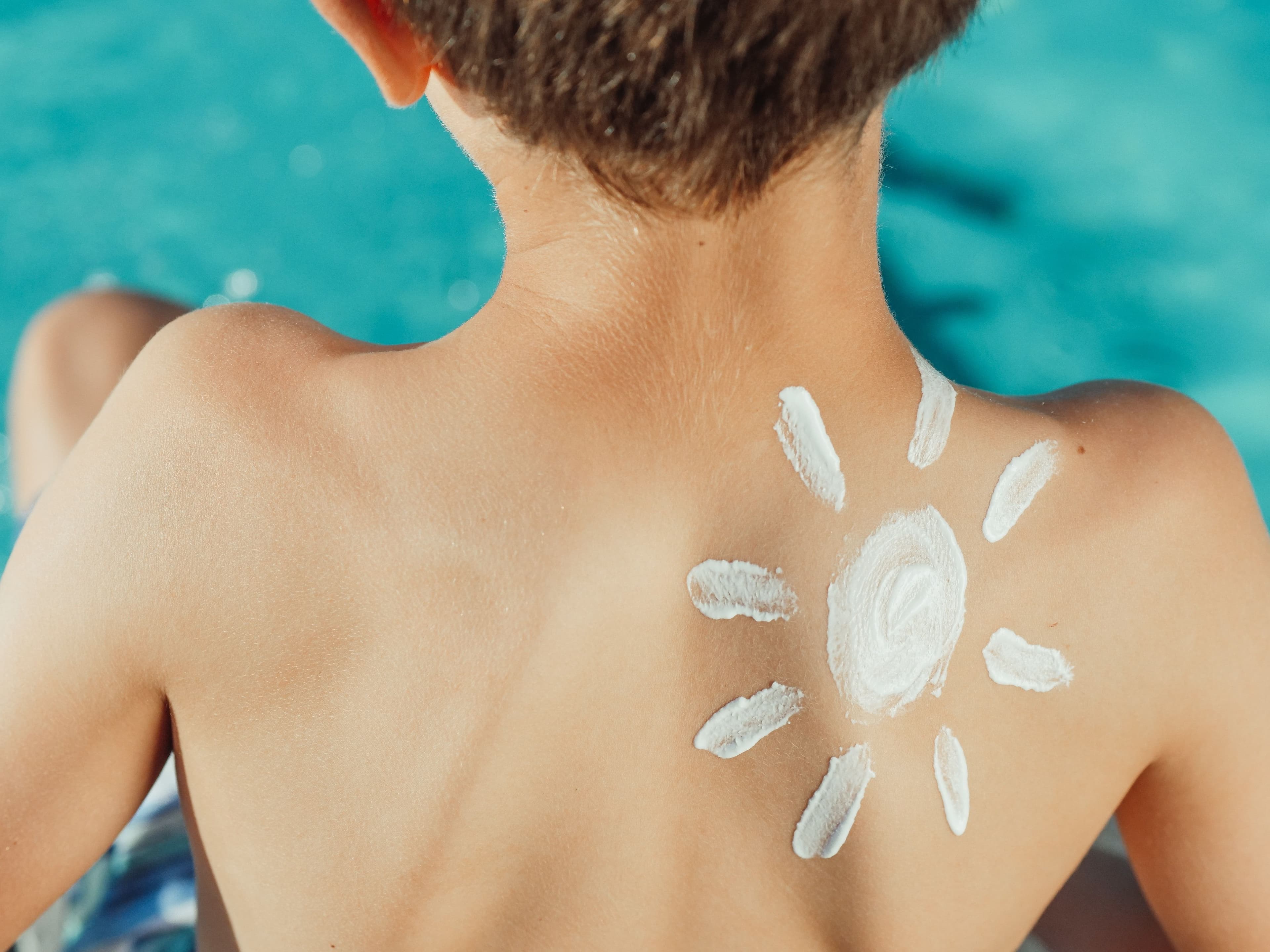
A UPF 50+ rash guard is the single most useful thing you can put on a toddler at a splash pad. Sunscreen washes off in about five minutes of getting sprayed, and toddlers will not hold still long enough to reapply. A rash guard keeps working when it's wet.
For bottoms, either a swim diaper (still, if they're not fully potty-trained) or quick-dry swim shorts. Cotton is the enemy at every age but especially now. Soggy cotton shorts or a waterlogged cotton diaper cover will keep your toddler cold long after they're done playing, and toddlers already can't regulate temperature as well as older kids.
Water shoes really do earn their keep starting here. Concrete around a splash pad gets genuinely hot in direct sun, and early walkers slip on wet surfaces easily. Look for something with a real rubber sole and a strap that won't come off when they run. Crocs work in a pinch but tend to fly off mid-sprint.
What works best for older kids, four and up?
This is the easy age. Any quick-dry swimsuit works. One-piece, two-piece, board shorts, swim trunks, whatever your kid will actually put on without a fight. The rules loosen because older kids can tell you when they're cold, can reapply their own sunscreen, and aren't going to eat a swim shoe.
The one thing to hold the line on: a UPF rash guard or swim shirt for anyone who burns easily, or for anyone spending more than an hour at the splash pad. This is where most older-kid sunburns actually happen, because parents relax on sun protection once the diaper stage is over. Splash pads mean full sun and reflective water for hours, and no sunscreen can survive that reapplication schedule on its own.
Sandals with a heel strap work fine for most older kids. Flip-flops are a bad idea. They come off constantly, they get lost, and running in them on wet concrete is how kids fall. If your kid still likes water shoes, great, but they aren't strictly necessary anymore.
What about sun protection when the water keeps washing sunscreen off?
This is the biggest thing parents get wrong at splash pads, at every age. You put sunscreen on your kid in the parking lot, they run through the water for five minutes, and now they have almost none of it left. You cannot sunscreen your way through a two-hour splash pad session.
The answer is layered. UPF-rated clothing does most of the work. Sunscreen fills in the gaps (face, hands, feet, the back of the neck). And shade breaks every 20 to 30 minutes if there's shade available. A wide-brimmed sun hat helps a lot. So does a swim shirt with long sleeves for kids who burn fast.
If the splash pad you're at has zero shade, and a lot of them don't, bring your own. A small pop-up sun shelter or a big beach umbrella you can wedge into a stroller gives you somewhere to reset between rounds.
FAQ
Can my baby wear a regular diaper at a splash pad?
Really, really don't. A regular diaper hits water, swells up with several pounds of absorbent gel, and then starts to leak or fall apart. Beyond how uncomfortable this is for your baby, the falling-apart part is genuinely gross for the water play area everyone else is using. Most splash pads have signs requiring swim diapers for exactly this reason. Grab a pack before you go.
Are UPF rash guards really necessary if my kid is only there an hour?
An hour is exactly long enough to sunburn a kid at midday in July. The water splashing up onto them reflects sun back onto their face and shoulders, and the sunscreen you put on in the parking lot is mostly gone within the first ten minutes of play. A rash guard is the one piece of sun protection that keeps working when everything else has washed off.
What if my toddler refuses to wear a swimsuit?
A UPF-rated athletic shirt and quick-dry shorts work fine and are honestly indistinguishable from a swimsuit at this age. What you want to avoid is cotton anything, which stays wet, gets heavy, and makes them cold. If the fight is over an actual swimsuit, cheat with athletic gear and a rash guard and call it good.
Do I need to bring a change of clothes?
Yes, always. Kids don't dry off between the splash pad and the car in any meaningful way, and sitting in a wet car seat for the ride home is miserable for everyone. Bring a change plus a towel to wrap them in for the walk to the car. For babies, bring two changes, because it will not go how you think.
One-piece or two-piece swimsuit for girls at a splash pad?
Either works. If the two-piece has a rash-guard top with UPF, that's often the most sun-protective option, because rash-guard tops usually have longer sleeves than a one-piece will. One-pieces are easier for potty-training toddlers to get out of on their own for bathroom trips, which is a small thing that matters when it matters.
Find a splash pad near you
Browse all splash padsYou might also enjoy
When Do Splash Pads Open? A Region-by-Region Guide
Splash pad season isn't the same everywhere. Here's how climate and location affect when parks open and close, plus how to check a specific one near you.
August 8, 2026
What to Bring to a Splash Pad: The Ultimate Packing List
Splash pads have their own quirks (hot pavement, no lifeguards, everyone soaked in minutes). Here's exactly what to pack so your next trip goes smoothly.
July 31, 2026

Are Splash Pads Safe? Everything Parents Should Know
Yes, generally. Here's the honest short version of the safety picture: what the design actually protects against, what water quality really means, and when a splash pad is worth skipping.
July 18, 2026